Let There Be (Pavilion) Light
A beautiful timber pavilion deserves to shine after sunset. The right pavilion lighting ideas can turn a daytime shade structure into the most inviting room on your property, no walls required. Whether you are planning a new build or upgrading an existing structure, lighting is what extends your pavilion from an afternoon retreat into an evening destination.
Below, we break down the most popular outdoor pavilion lighting options, compare wired versus solar setups, and show you why planning your lights before construction makes all the difference.
Why Lighting Transforms a Timber Pavilion
Think about the last time you walked into a restaurant with perfect ambiance. That feeling was not an accident. It was lighting.
A timber frame pavilion already has incredible natural beauty, exposed beams, rich wood grain, and strong architectural lines.
Strategic lighting amplifies every one of those details. Without it, your pavilion essentially disappears the moment the sun goes down. With it, those post-and-beam joints become sculptural, your dining table becomes the center of the universe, and your backyard becomes the place everyone wants to be.
Lighting also adds a layer of safety and functionality. Illuminated steps, pathways, and cooking surfaces mean your pavilion works for late-night dinners, holiday parties, and early morning coffee sessions year-round.
String Lights: The Most Popular Pavilion Lighting Option
Let’s start with the crowd favorite. String lights are the easiest, most affordable way to add warmth to any pavilion. They drape beautifully between timber beams, create a soft canopy of light overhead, and instantly set a relaxed, celebratory mood.
For timber frame pavilions, commercial-grade café string lights with Edison bulbs tend to look best. They are heavier-duty than standard patio lights and complement the rugged character of real wood. Run them in parallel lines across the ridge beam or create a starburst pattern from a center point outward.
Quick Tip
Install screw-in hook mounts into your beams during construction. This gives you permanent, clean anchor points so you never have to wrestle with clips or zip ties again.
Recessed Soffit Lighting: Clean and Weather-Resistant
If you want a backyard pavilion lighting setup that looks built-in and polished, recessed soffit lights are hard to beat. These small fixtures tuck into the underside of the roof, casting downward light without any visible hardware.
They work especially well in hipped and gable pavilions where the roof structure is the visual centerpiece. Since the fixtures sit flush, rain, snow, and wind have minimal impact. For Utah homeowners dealing with heavy snow loads, this matters because nothing is dangling that can collect ice or get knocked loose.
Hanging Pendant Lights for Dining Areas
Want your outdoor dining space to feel intentional? A single statement pendant or a row of three hanging fixtures above a table creates an instant focal point. Pendant lights bring an indoor-quality dining experience to your pavilion without sacrificing the open-air atmosphere.
Wrought iron, matte black, or brushed metal finishes tend to pair naturally with timber. Hang them from the ridge beam at a height of roughly 30 to 36 inches above the table surface for the best balance of light and sightlines.
Wall Sconces and Post-Mounted Fixtures
Not every light needs to come from above. Sconces mounted directly on your pavilion posts create a layered lighting effect that makes the entire structure feel warmer and more dimensional.
Post-mounted fixtures are particularly effective for attached pavilions that connect to your home. They visually bridge the transition between interior and exterior spaces, reinforcing a cohesive design language. This is especially useful when your attached pavilion serves as an extension of your indoor living area, like a dining or lounging space.
LED Strip Lighting for Modern Pavilions
For homeowners with a modern single slope pavilion, LED strip lighting is the go-to. Tucked along beam undersides, inside step risers, or along the roofline, strips produce a clean ambient glow that feels contemporary and architectural.
LED strips are energy efficient, dimmable, and available in a wide range of color temperatures. A warm white (2700K–3000K) keeps the look inviting without veering into the cold, clinical territory that sometimes plagues LED installations.
Solar vs. Wired Lighting: Which Is Better for Pavilions?
This is one of the most common questions we hear. Here is a straightforward comparison:
| Feature | Solar Lighting | Wired (Hardwired) Lighting |
|---|---|---|
| Installation Cost | Low — no electrician needed | Higher — requires electrical work |
| Brightness | Moderate, depends on sun exposure | Consistent and fully adjustable |
| Reliability | Weather-dependent charging | Always on when you need it |
| Best For | Accent lighting, pathways | Primary pavilion illumination |
| Maintenance | Battery replacement over time | Minimal once installed |
| Dimming Control | Limited | Full dimmer compatibility |
Our recommendation: Use wired lighting as your primary system for timber frame pavilion lights and supplement with solar fixtures along pathways or garden borders. This gives you dependable brightness under the roof and a soft, ambient glow leading up to the structure.
How to Plan Your Pavilion Lighting Before You Build
Here is where most homeowners miss an opportunity. The best time to plan your lighting is during the design phase, not after the pavilion is already standing. Pre-wiring during construction is dramatically easier and cheaper than retrofitting later.
When you work with a builder like Utah Pavilion Company, electrical routing is incorporated into the engineering stage. That means conduit runs are hidden inside posts, junction boxes sit flush behind beams, and switches land exactly where you want them.
A Simple Planning Checklist
- Define your primary use — dining, lounging, cooking, or entertaining
- Choose a primary fixture type — recessed, pendant, or string lights
- Add at least one accent layer — sconces, LED strips, or pathway lights
- Decide on wired vs. solar for each zone
- Confirm switch and dimmer placement with your builder before framing begins
Planning ahead means no exposed wires, no awkward extension cords, and no compromise on the finished look.

Light It Up, Then Live in It
The right pavilion lighting ideas do more than illuminate a structure. They define how your family uses that space after dark, how guests feel when they step underneath, and how your home looks from the street on a summer evening. A well-lit pavilion is not a luxury add-on. It is the detail that completes the entire build.
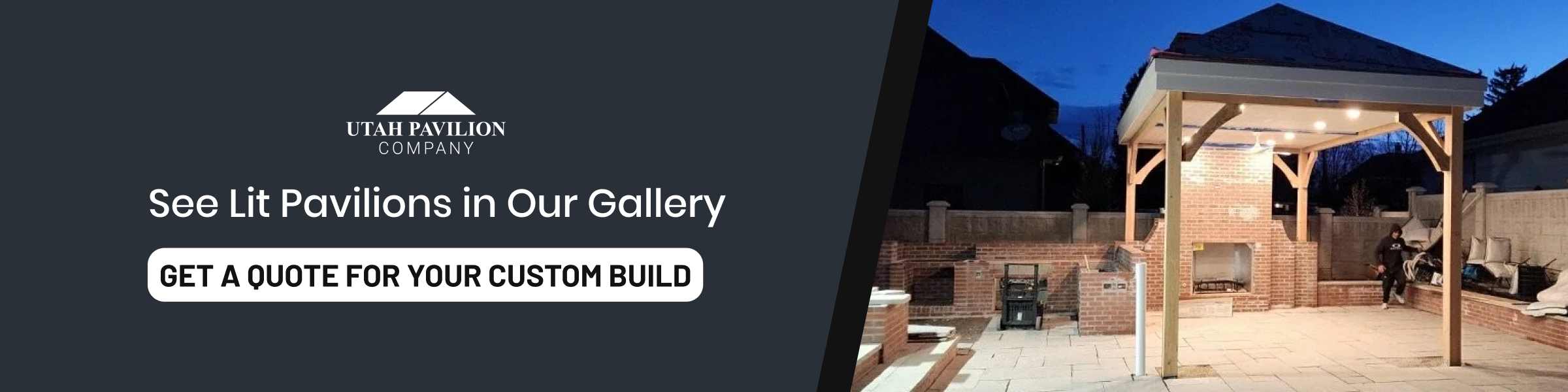
Want to see what is possible? Browse our gallery to see lit pavilions in action, or get a free quote and tell us about your dream outdoor space.
At Utah Pavilion Company, we build custom timber pavilions designed for Utah’s climate, and we make sure they look just as stunning at night.
Frequently Asked Questions About Pavilion Lighting
What is the best Pavilion Lighting Idea for a small structure?
String lights or recessed soffit fixtures work best for compact spaces. They provide warm, even illumination without overwhelming the structure, regardless of pavilion size, and create a cozy, inviting atmosphere after dark.
Does adding lighting to a pavilion increase home value?
Yes. A well-designed backyard pavilion lighting setup enhances curb appeal and usable outdoor living space. Combined with quality timber construction, thoughtful lighting consistently increases home value and attracts potential buyers.
When should I plan pavilion lighting during construction?
Always plan lighting during the design phase. When you plan a backyard pavilion with your builder, pre-wiring is integrated into the structure, keeping conduit hidden and ensuring a clean, professional finish.
How does pavilion size affect the lighting layout?
Larger pavilions need layered lighting combining pendants, recessed fixtures, and accent strips. Smaller structures may only need one primary source. Pavilion size directly determines fixture count, brightness levels, and electrical requirements.
Can I combine multiple Pavilion Lighting Ideas in one structure?
Absolutely. Layering different Pavilion lighting ideas, such as string lights overhead, sconces on posts, and LED strips along beams, creates depth and ambiance that a single fixture type cannot achieve alone.
What is the best Pavilion Lighting Idea for a rustic timber structure?
For rustic timber frames, we recommend layering Edison-style string lights with column uplighting. The string lights provide a festive, “fairytale” atmosphere, while the uplighting highlights the massive scale and natural beauty of the wood beams. Adding a wrought-iron chandelier in the center can provide a touch of “mountain-modern” elegance.
How do I select a weather-resistant Pavilion Lighting Idea?
Always check the UL (Underwriters Laboratories) rating on the box. If the light will be under the roof and protected from direct rain, look for a “Damp Rated” label. If the light will be on a post or a walkway where it will get rained on, it must be “Wet Rated.” Also, look for materials like copper, brass, or powder-coated aluminum, which stand up well to Utah’s snowy winters.
Can I install a Pavilion Lighting Idea as a DIY project?
Yes, for many options! String lights, solar-powered path lights, and battery-operated lanterns are all easy DIY projects. However, if you want to install recessed lights, ceiling fans, or hardwired sconces, you will likely need to run electrical lines from your home. For that, we recommend professional installation to ensure everything is safe and meets local building codes in cities like Layton or Syracuse.