
Douglas Fir vs Cedar Pavilions: Which Wood Is Right for You?
Choosing between Douglas Fir and Cedar for your pavilion? Compare strength, appearance, cost, and longevity to find the best wood for your Utah backyard.
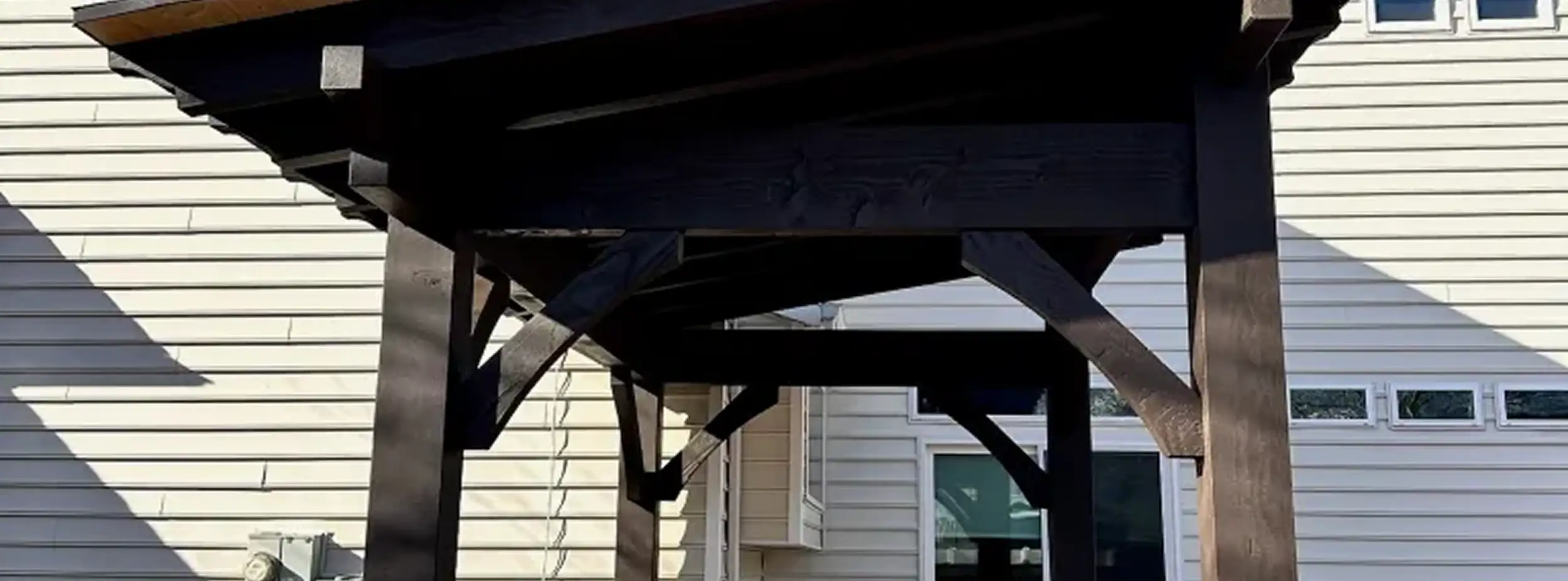
The Selection Process
The Foundation of Your Legacy
If you are comparing these two species, you are already past the "should I build a pavilion?" stage. You are ready to build the right one. This guide breaks down how Douglas Fir and Cedar stack treatment.
Aesthetic character
What grain pattern, color, and stain response will define the look of your outdoor space?
Maintenance profile
How often will you need to reseal or restain to keep the pavilion looking its best?
The wrong species for your site, your climate, or your design priorities can mean premature aging, structural compromises, or unnecessary maintenance costs. The right species gives you a pavilion that performs and looks exactly the way you envisioned it for decades.
What Is Douglas Fir?
Douglas Fir (Pseudotsuga menziesii) is the most widely used structural softwood in North America and the gold standard in timber framing. It is not a true fir. It belongs to its own genus, and its mechanical properties set it apart from nearly every other softwood on the market.
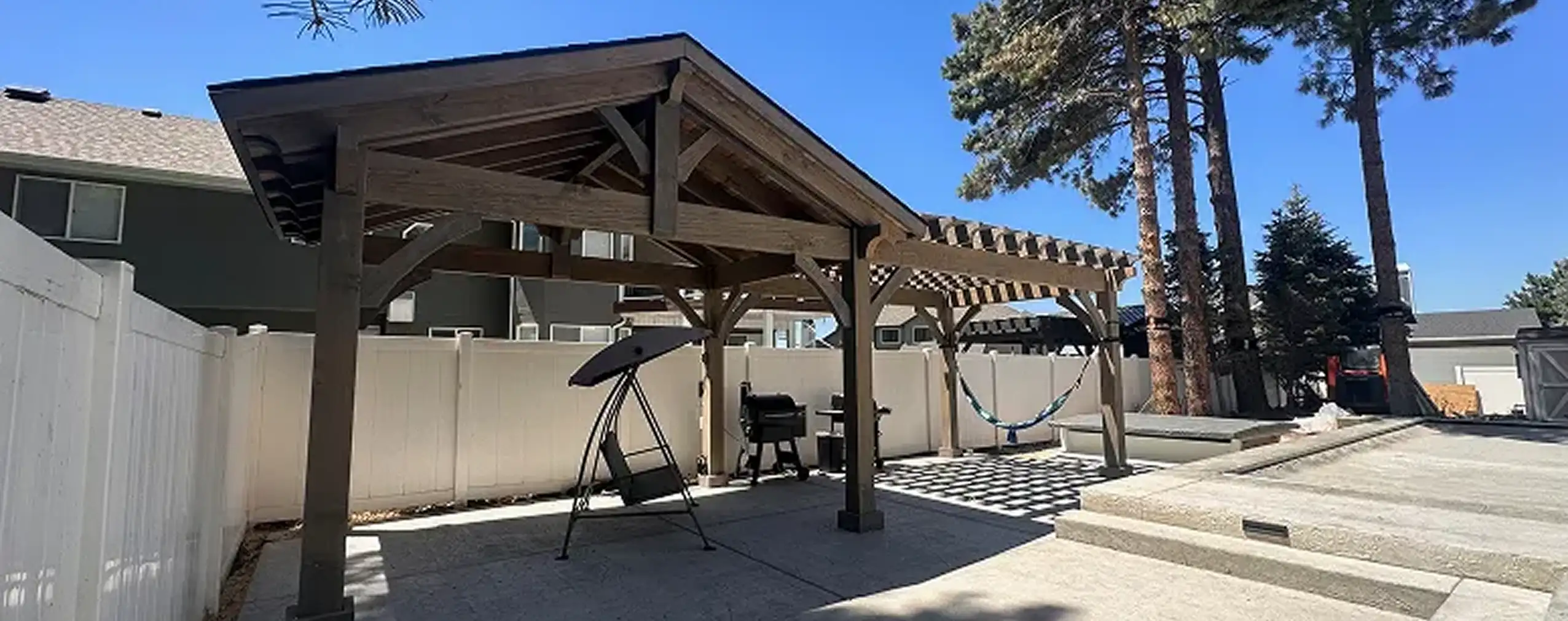
Key Characteristics
- Density — Douglas Fir is significantly denser than most softwoods, weighing up to 40% more than Cedar by volume. That added mass translates directly into load-bearing strength.
- Strength ratings — It rates the highest of any western softwood for bending strength, compression, and stiffness, which is why engineers specify it for structural beams and posts.
- Grain — A pronounced, straight grain with a warm honey-to-reddish-brown tone that accepts stain beautifully.
- Availability — One of the most abundant wood species in North America, making it both a cost-effective and environmentally responsible choice for large-timber construction.
- Grade quality — Premium Douglas Fir can be sourced in large dimensions of timbers up to 60 feet long while avoiding the heart center (FOHC), which significantly reduces the risk of checking and cracking over time.
When designed correctly, a pavilion does not feel added on. It feels original.
What Is Western Red Cedar?
Western Red Cedar (Thuja plicata) is prized throughout the outdoor construction industry for its natural resistance to decay, moisture, and insects. It has been used for centuries in climates ranging from the Pacific Northwest to the mountain West, and it carries a distinct visual warmth that many homeowners find irresistible.
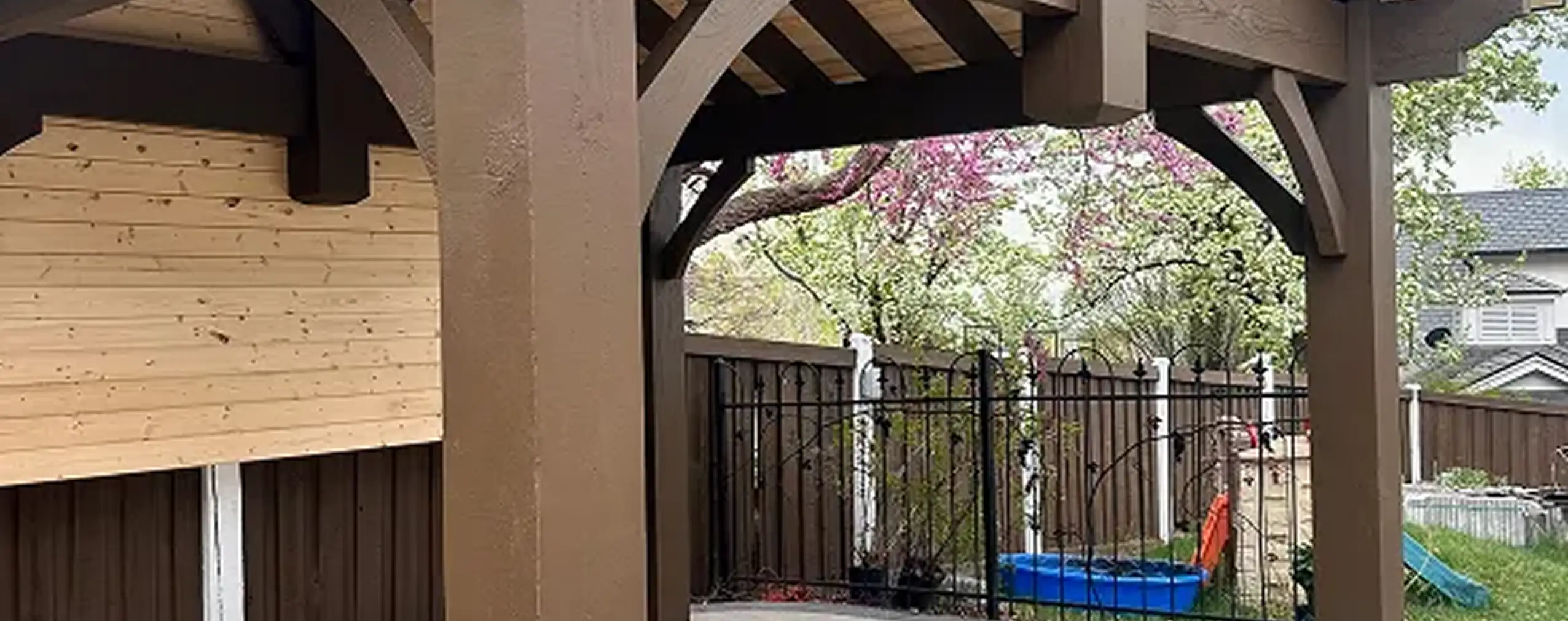
Key Characteristics
- Natural oils —Cedar contains extractives, natural compounds in the heartwood, that make it inherently resistant to rot, fungal decay, and insect damage without chemical treatment.
- Weight —Cedar is a lighter-weight softwood, which makes it easier to handle during construction but also means lower density compared to Douglas Fir.
- Dimensional stability —Cedar has one of the lowest shrinkage rates among softwoods, meaning it is less prone to warping and cupping as it dries.
- Color —A rich, reddish-brown heartwood that weathers to a distinguished silver-gray if left untreated, or maintains its warm tone with periodic staining.
- Aroma — Cedar's distinctive scent is a natural insect deterrent and adds a sensory element to your outdoor space.
Cedar is the species of choice when natural weather resistance and visual richness are your top priorities.
Strength, Density, and Load Capacity
This is where the two species diverge most dramatically. For a permanent roofed structure like a pavilion, particularly one engineered for Utah snow loads, structural performance is not optional.
Property
Specific gravity
Bending strength (MOR)
Stiffness (MOE)
Compression parallel to grain
Relative weight
Free-span capability
Douglas Fir
~0.50
~12,400 psi
~1.95 million psi
~7,230 psi
Heavier (higher density)
Longer spans with smaller beam sizes
Western Red Cedar
~0.32
~7,500 psi
~1.11 million psi
~4,560 psi
Lighter (lower density)
May require larger beams for equivalent spans
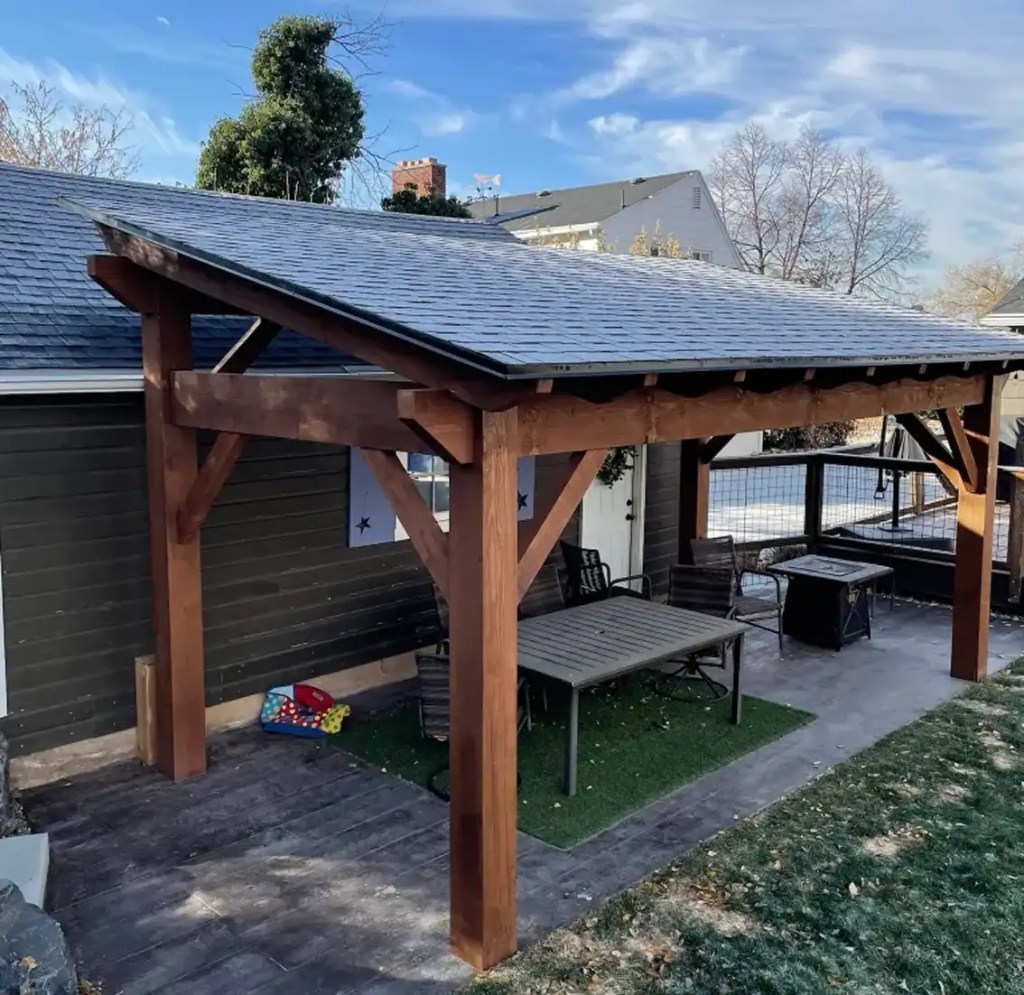
What does this mean for your pavilion?
Douglas Fir can span greater distances between posts using the same beam dimensions, or achieve the same span with smaller, lighter-looking members. For pavilions with open floor plans, wide entertaining areas, or heavy snow-load requirements common throughout Utah's Wasatch Front and valley communities, Douglas Fir delivers a measurable structural advantage.
Cedar can absolutely be used in structural pavilion applications, but engineers may specify larger member sizes to achieve equivalent load ratings. This is an important consideration during the design phase, as it can affect both aesthetics and material cost.
Appearance and Grain: How Each Wood Looks Over Time
Both species are genuinely beautiful, but they age differently and respond to finishes in distinct ways.
Douglas Fir
- Starts with a warm, honey-gold to reddish-brown color with a bold, prominent grain pattern.
- The pronounced grain gives beams and posts a strong, structural character. You can see the strength in the wood
- Accepts stain exceptionally well, allowing you to dial in exactly the tone you want, from natural golden hues to deep walnut
- With a quality exterior stain and periodic maintenance, Douglas Fir holds its color and finish longer than most softwoods due to its density.
Western Red Cedar
- Begins with a rich, reddish-brown heartwood that has a finer, more uniform grain pattern.
- Has a softer, more refined visual texture; many homeowners describe it as warmer and more elegant.
- If left unfinished, Cedar weathers to a silver-gray patina that some find appealing and others prefer to prevent with stain
- Cedar absorbs stain well, though its natural oils can sometimes require a compatible finish system for best adhesion.
The Bottom Line on Appearance
If you want your pavilion to make a bold, timber-forward statement with visible grain and a rugged, architectural feel, Douglas Fir is hard to beat.
If you prefer a smoother, more refined aesthetic with rich color depth and a softer visual character, Cedar will likely appeal to you more.
Weather Resistance and Natural Durability in Utah's Climate
Utah throws everything at an outdoor structure: heavy snow accumulation in winter, intense UV exposure in summer, rapid temperature swings in spring and fall, and low humidity year-round. Both woods handle these conditions, but through different mechanisms.

Douglas Fir and Utah Weather
Snow load performance: Douglas Fir's superior strength-to-weight ratio makes it the preferred structural choice for pavilions in areas with significant snow accumulation. Utah mountain regions average over 500 inches of snowfall annually, and even valley areas see regular heavy snow events.
UV and moisture: Douglas Fir is not naturally rot-resistant. It requires a quality exterior stain or sealant to protect against moisture intrusion and UV degradation.
Checking: Higher density means Douglas Fir can develop surface checks (small cracks) as it seasons. Using FOHC (Free of Heart Center) grade timber significantly reduces this.

Western Red Cedar and Utah Weather
Natural decay resistance: Cedar's heartwood oils provide built-in protection against rot, fungal growth, and insect damage even without applied finishes.
Dimensional stability: Cedar's low shrinkage rate means it handles Utah's dry climate and temperature swings with minimal warping or movement.
UV exposure: Cedar will gray over time without a UV-protective finish. In Utah's high-altitude sun, this process happens faster than in coastal or northern climates.
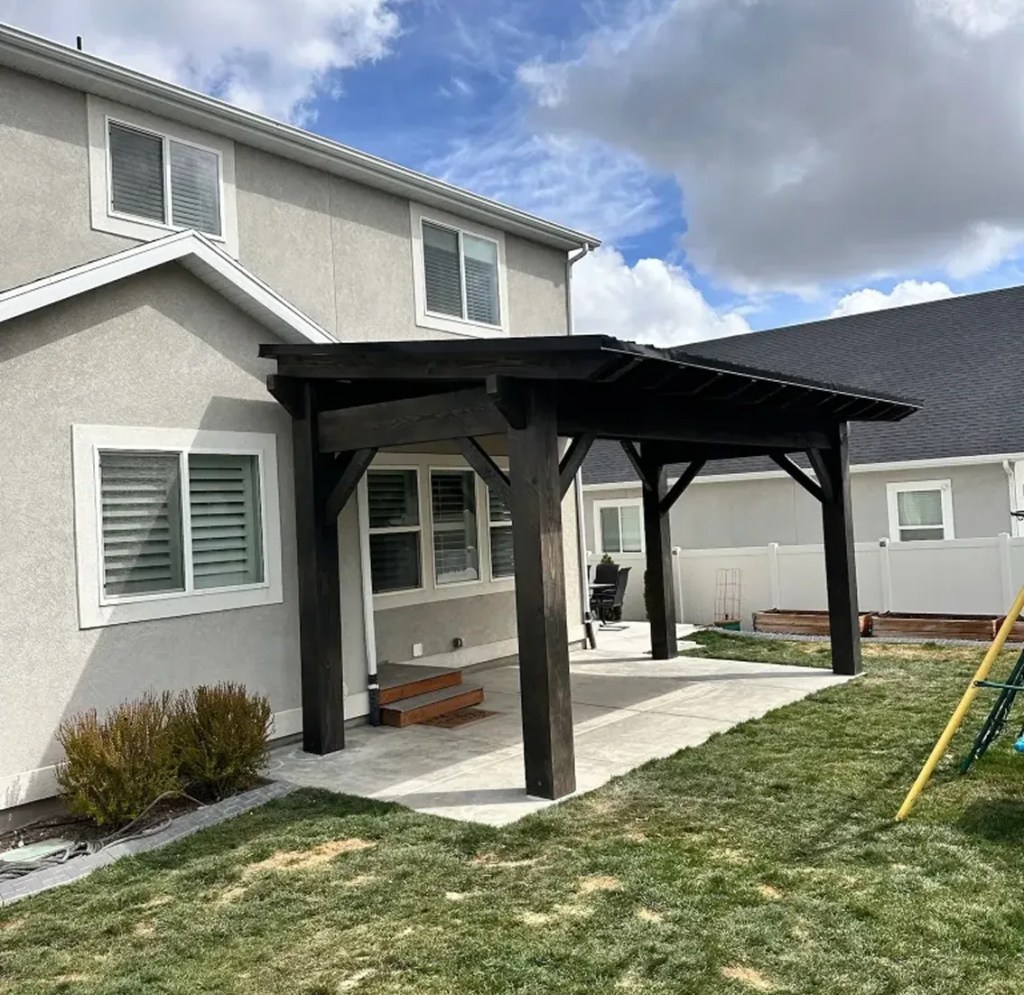
Which Holds Up Better?
For structural resilience under heavy loads, Douglas Fir wins. For natural resistance to biological degradation, Cedar wins. In practice, both species perform well in Utah when properly finished and maintained, but each needs a maintenance approach matched to its properties.
Cost Comparison: Douglas Fir vs. Cedar Pavilions
Cost is always part of the equation. Here is how the two species generally compare at the material level:
Cost Factor
Raw material cost
Availability in large dimensions
Structural efficiency
Finishing costs
Long-term maintenance
Douglas Fir
Lower per board foot
Readily available
May require smaller members for the same span
Requires quality sealant/stain (standard)
Periodic restaining every 2–4 years
Western Red Cedar
Higher per board foot
Available, but premium grades cost more
May require larger members, increasing total board footage
Requires quality sealant/stain (standard)
Periodic restaining every 2–4 years
Douglas Fir typically costs less at the material level, and its higher structural efficiency can mean less total timber is needed for your design. Cedar carries a higher material premium, but its natural durability may reduce the urgency of early-year maintenance.
The total cost of your pavilion depends on far more than wood species alone, size, roof style, joinery complexity, site conditions, and installation scope, all of which factor in. Custom pavilion costs in Utah vary by project, so the best approach is to request a detailed quote based on your specific design.
Matching Wood Species to Your Pavilion Style
Matching Wood Species to Your Pavilion Style
- Gable and Hipped Pavilions — These styles often feature long ridge beams and wide open spans. Douglas Fir's strength allows for clean, uninterrupted spans without oversized members.
- Single Slope and Modern Single Slope Pavilions — The sleek, minimal aesthetic of these styles pairs well with either species, though Cedar's finer grain can complement the contemporary look.
- Attached Pavilions — When connecting to your home, it's important to match the visual tone of your existing architecture. Both species can be stained to coordinate, so the choice often comes down to structural requirements and personal preference.
If you are still in the planning stages, the How to Plan Your Pavilion guide walks through design decisions from layout to materials.
What Utah Pavilion Company Recommends — And Why
At Utah Pavilion Company, we build with both select Douglas Fir and premium Western Red Cedar, never treated pine, never low-grade lumber substitutes. We are one of the few pavilion builders in Utah that offers both species and can help you choose based on your specific project, not a one-size-fits-all recommendation.
Utah Pavilion Company Recommends...
Choose Douglas Fir If:
Your priorities are maximum structural strength, longer free spans, snow-load performance, and cost efficiency. It is our most-specified species for pavilions across Utah's Wasatch Front communities, where engineered snow-load capacity is non-negotiable.
Choose Cedar If:
Your priorities are natural decay resistance, dimensional stability, and a refined visual warmth. It is an excellent choice for garden pavilions, poolside structures, and settings where the wood's natural beauty is the centerpiece.
Consider combining both
Douglas Fir for structural posts and beams where strength matters most, and Cedar for trim, ceiling details, or areas where natural rot resistance provides a practical advantage.
Choose Douglas Fir If:
Your priorities are maximum structural strength, longer free spans, snow-load performance, and cost efficiency. It is our most-specified species for pavilions across Utah's Wasatch Front communities, where engineered snow-load capacity is non-negotiable.
Choose Cedar If:
Your priorities are natural decay resistance, dimensional stability, and a refined visual warmth. It is an excellent choice for garden pavilions, poolside structures, and settings where the wood's natural beauty is the centerpiece.
Consider combining both
Douglas Fir for structural posts and beams where strength matters most, and Cedar for trim, ceiling details, or areas where natural rot resistance provides a practical advantage.
What Utah Pavilion Company Recommends — And Why
At Utah Pavilion Company, we build with both select Douglas Fir and premium Western Red Cedar, never treated pine, never low-grade lumber substitutes. We are one of the few pavilion builders in Utah that offers both species and can help you choose based on your specific project, not a one-size-fits-all recommendation.
- Based in Utah – Serving local installs & nationwide kits
- (801) 900-0633
- info@utahpavilioncompany.com
Frequently Asked Questions
Is Douglas Fir stronger than Cedar for a pavilion?
Yes. Douglas Fir has significantly higher bending strength, stiffness, and compression ratings than Western Red Cedar. It rates the highest of any western softwood for structural applications, making it the preferred choice when snow loads and long spans are design priorities.
Does Cedar last longer than Douglas Fir outdoors?
Cedar has superior natural resistance to rot, decay, and insects due to its heartwood oils. However, Douglas Fir lasts just as long when properly sealed and stained. Longevity depends more on maintenance and finish quality than species alone.
Which wood is more expensive for a pavilion?
Cedar generally carries a higher material cost per board foot. Douglas Fir is more cost-effective at the material level and may also require less total timber due to its structural efficiency. Total project cost depends on design, size, and site factors. Get a custom quote for an accurate estimate.
Can I mix Douglas Fir and Cedar in the same pavilion?
Absolutely. Some homeowners use Douglas Fir for the primary structural frame and Cedar for secondary elements, trim, or ceiling boards. This approach combines the structural strength of one with the natural durability of the other.
How often do I need to restain a timber pavilion in Utah?
Plan to inspect and restain every two to four years. Utah's high-altitude UV exposure and dry climate accelerate finish wear, particularly on south- and west-facing surfaces. Both Douglas Fir and Cedar benefit from a quality exterior stain with UV protection.
Which wood does Utah Pavilion Company use?
We build with both select Douglas Fir and premium Western Red Cedar. We do not use treated pine or low-grade substitutes. Our team recommends the right species based on your design requirements, structural needs, and aesthetic preferences.
Let’s Build Your Pavilion — Your Way
Tell us a little about your project, and we’ll help you take the next step. To book an appointment and view our impressive selection of Utah pavilions, get in touch with us.
Utah Pavilion Company is a premier provider of high-quality pavilions for residential backyards, commercial venues, parks, and more. We design and manufacture custom outdoor structures that bring lasting beauty, function, and value to your space.
- Based in Utah – Serving local installs & nationwide kits
- (801) 900-0633
- info@utahpavilioncompany.com
Get a Free Quote